
Last updated on October 22nd, 2026 at 06:59 am
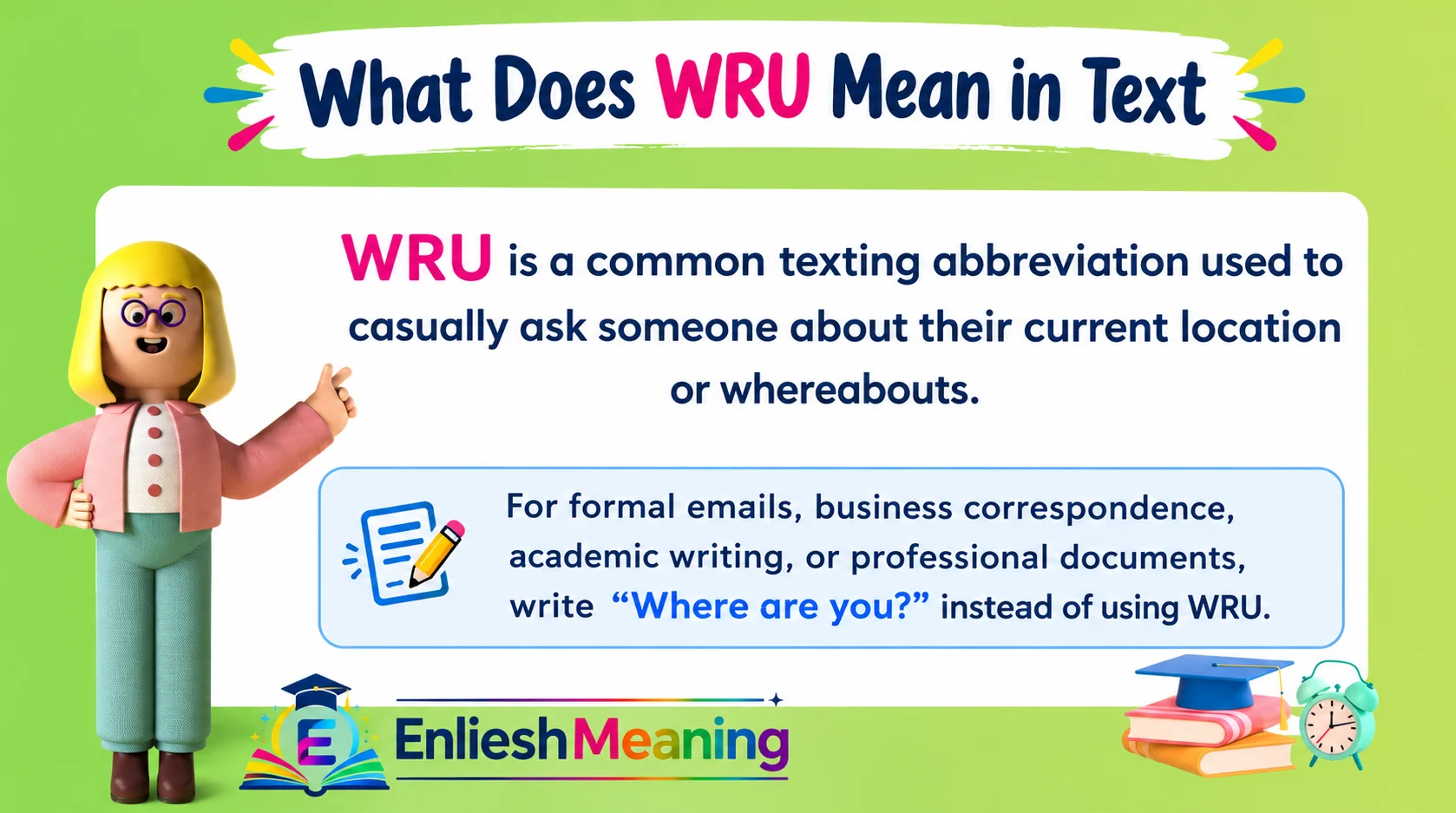
If you have received a message containing “WRU”, you may wonder what the abbreviation means and how you should respond. In texting and online conversations, WRU usually means “Where Are You?” It is a short and informal way to ask someone about their current location or whereabouts.
People commonly use it when they want to know where a friend, family member, partner, or another person is.
The abbreviation is popular because texting often encourages people to communicate quickly. Instead of typing the complete question, someone can simply write “WRU?” and expect the other person to understand the meaning.
You may see this abbreviation in text messages, WhatsApp chats, Instagram messages, Snapchat conversations, dating apps, and other social platforms.
People search for what does WRU mean in text because abbreviations can have different meanings depending on context. Although “Where Are You?” is the most common interpretation in casual messaging, understanding the surrounding conversation is important.
This guide explains its meaning, background, uses, related terminology, and appropriate responses.
Meaning & Definition Of WRU
WRU means “Where Are You?” in text messages. It is an informal texting abbreviation created by shortening the words in the original question.
For example:
Person A: WRU?
Person B: I’m at the mall.
In this conversation, WRU simply asks about Person B’s current location.
The abbreviation works because each part represents the beginning of a word:
- W = Where
- R = Are
- U = You
Instead of writing three complete words, the sender uses three letters. This makes the message faster to type and easy to understand among people who are familiar with texting slang.
WRU Meaning in Simple English
In simple English, WRU can be understood as:
“Where are you?”
Depending on the situation, it can also carry a slightly different conversational meaning, such as:
- Where are you right now?
- Where are you located?
- Where have you reached?
- Where are you going?
- Where can I find you?
The exact meaning depends on the conversation.
For instance, if a friend says, “WRU? We’re waiting for you,” they are probably asking for your current location because they expect you to arrive.
If someone sends “WRU tonight?”, they may be asking about your plans or where you will be later rather than your exact current location.
Is WRU Formal or Informal?
WRU is strongly associated with informal digital communication. It is suitable for casual conversations with people who understand texting abbreviations.
It is generally better to write “Where are you?” in formal emails, business correspondence, academic writing, official messages, or professional documents.
Background
How Did WRU Become Popular?
WRU developed as part of the broader culture of internet and mobile-phone messaging. As people began communicating through SMS, instant messaging, and online chat platforms, short forms became increasingly common.
Text messages traditionally encouraged concise communication. Users sometimes had character limits, slower typing methods, or a desire to send messages quickly. This environment helped popularize abbreviations such as WRU.
The structure is straightforward. Instead of spelling out every word, the sender substitutes letters that sound like or represent the original words. In WRU, the letters correspond directly to Where, Are, and You.
Why Do People Use Short Forms?
Texting abbreviations save time and create a relaxed conversational style. They can also make a message feel more casual and friendly.
Someone might write:
“WRU? I’m outside.”
rather than:
“Where are you? I’m outside.”
Both sentences communicate essentially the same information, but the first feels quicker and more informal.
Over time, abbreviations became common across messaging services and social networks. Younger users and frequent internet communicators may recognize WRU immediately, while someone unfamiliar with texting slang may need an explanation.
WRU and the Evolution of Digital Language
Digital communication has created a large vocabulary of shortened expressions. Terms such as “BRB,” “LOL,” “IDK,” “WYD,” and “TTYL” are examples of how online communication can compress everyday phrases.
WRU belongs to this same family of conversational shorthand. Its meaning is relatively easy to understand once the pattern of texting abbreviations is familiar.
Usage in Different Contexts
WRU in Casual Chat
The most common use is asking someone where they are.
Example:
“WRU? The movie starts in 10 minutes.”
Here, the sender wants the recipient’s location because they are waiting for them.
WRU on Social Media
On social platforms, WRU can appear in direct messages, comments, or casual conversations. A person may use it when trying to meet someone or continue a conversation.
For example:
“WRU rn?”
Here, rn means “right now,” making the message mean “Where are you right now?”
WRU in Professional Situations
Although WRU may occasionally appear in an informal workplace chat, it is not normally recommended for formal professional communication.
A colleague might casually message:
“WRU? Meeting starts soon.”
But a professional email would normally say:
“Where are you currently located?”
or
“Could you let me know where you are?”
The appropriate choice depends on the relationship and communication channel.
WRU Between Friends
Friends frequently use WRU because there is usually no need for formal language. The abbreviation can make the exchange quick and natural.
Example:
“WRU?”
“At home.”
“Coming out later?”
This demonstrates how WRU can naturally begin a casual conversation.
Meaning in Chat, WhatsApp, Instagram, and TikTok
WRU Meaning in Chat
In general online chat, WRU almost always means “Where are you?” when the conversation is informal.
The sender may be asking for your location, asking where you have reached, or checking whether you are available to meet.
WRU Meaning on WhatsApp
On WhatsApp, WRU is commonly used in personal conversations.
For example:
“WRU? I’ve been waiting for you.”
The person probably wants to know where you are physically.
Another example:
“WRU rn?”
This asks where you are at the present moment.
WRU Meaning on Instagram
Instagram users may use WRU in direct messages, especially when making plans or trying to meet.
For example:
“WRU? We’re near the restaurant.”
The message is essentially asking, “Where are you?”
WRU Meaning on TikTok
TikTok users may use WRU in comments or private messages, although its meaning remains dependent on context. In ordinary casual communication, the abbreviation generally means “Where are you?”
It is not a special TikTok-only abbreviation. The same basic interpretation applies across most social platforms.
WRU Meaning in Physics, Medical, and Aircraft Terminology
WRU in Physics
In ordinary physics terminology, WRU is not generally recognized as a standard universal abbreviation for “Where Are You?” The texting meaning should not automatically be applied to technical writing.
Scientific abbreviations can vary between textbooks, research papers, laboratories, and specialized fields. Therefore, if WRU appears in a physics document, its meaning must be determined from the surrounding material.
WRU in Medical Contexts
Similarly, WRU does not have one universal medical meaning that should be assumed whenever the abbreviation appears in healthcare-related material.
Medical abbreviations can be highly context-dependent. Hospitals, clinical specialties, research publications, and healthcare organizations may use different shorthand.
Therefore, if you encounter WRU in a medical document, prescription-related material, or clinical communication, do not automatically interpret it as “Where Are You?” Check the surrounding terminology or ask a qualified professional for clarification when accuracy matters.
WRU in Aircraft or Aviation Terminology
Aviation also uses numerous abbreviations and codes. However, the texting expression WRU should not automatically be treated as an aviation term.
If WRU appears in an aircraft-related manual, aviation communication, technical document, or flight-related system, its intended meaning should be established from that specific source or context.
Why Context Matters
The same group of letters can potentially represent different things in different industries. Therefore:
WRU in a text message → usually “Where Are You?”
WRU in a technical document → investigate the specific context.
This distinction prevents confusion between internet slang and specialized terminology.
Common Misconceptions
WRU Always Means “Where Are You”
In everyday texting, this is overwhelmingly the most recognizable interpretation. However, abbreviations can have alternative meanings in specialized environments.
The safest approach is to consider the surrounding message.
WRU Is a Formal English Expression
WRU is not standard formal English. It is texting shorthand. While people may understand it easily, it should generally be avoided in formal essays, official correspondence, academic assignments, and professional documents unless the context specifically involves informal digital communication.
WRU Is Rude
WRU itself is not inherently rude. Tone depends on how it is used.
Compare:
“WRU?”
with:
“WRU??? I’ve been waiting forever!”
The second message may feel impatient because of the surrounding language and punctuation, not because WRU itself is offensive.
WRU Always Requests an Exact Location
Not necessarily. Sometimes WRU is simply a casual way of asking what someone is doing or where they have reached.
For example:
“WRU tonight?”
could mean “Where will you be tonight?” rather than “What exact location are you standing in right now?”
WRU Is the Same as WYD
These abbreviations are related but different. WRU asks about someone’s location, while WYD generally means “What are you doing?”
How WRU Is Used in Different Types of Text Conversations
WRU is a common texting abbreviation that means “Where are you?” People use it in text messages and online chats when they want to know someone’s location or find out where they are at a particular moment. Instead of typing the full question, they use WRU to communicate quickly, especially when making plans or coordinating with friends.
In everyday conversations, WRU often appears when someone is waiting for another person or trying to arrange a meeting. For example, a friend might text, “WRU? We’re all waiting outside.” In this situation, the sender wants to know the recipient’s current location so they can coordinate their plans. The message is usually casual and direct rather than rude.
WRU can also be useful when people are traveling together or meeting in a crowded place. Someone attending a concert, shopping mall, or public event might send “WRU?” to locate a friend. The recipient could respond with a short message such as “I’m near the main entrance” or “I’m on my way.” These exchanges show how abbreviations can make everyday communication faster.
On social media and messaging platforms, WRU may appear in direct messages, group chats, or conversations that begin after a period of silence. For instance, someone might send “Hey, WRU?” when trying to reconnect with a friend or arrange a spontaneous meetup. The exact tone depends on the relationship and the surrounding conversation.
Although WRU usually means “Where are you?” in casual texting, it is important to consider the context. Someone asking WRU may simply be checking your location, but the question could also relate to an appointment, a planned activity, or a time-sensitive situation. The abbreviation itself does not necessarily indicate impatience or concern.
WRU is generally best suited to informal communication with friends, relatives, or people who are familiar with texting shorthand. In professional situations, such as contacting a colleague about a meeting, writing “Where are you?” or “Are you on your way?” may sound clearer and more appropriate.
The abbreviation should also be used thoughtfully because asking someone about their location can involve personal privacy. If you are messaging someone you do not know well, consider whether the question is appropriate and avoid pressuring them to share details they would rather keep private.
Overall, WRU is a convenient way to ask where someone is during a casual conversation. Its meaning is usually straightforward, but the relationship, situation, and tone of the message help determine how the question is received.
How to Respond When Someone Sends You WRU in a Text Message
When someone sends you WRU, they are usually asking, “Where are you?” The best response depends on your current situation, your relationship with the sender, and whether you want to share your location. In most casual conversations, a short and direct reply is enough.
If you are at a specific location and feel comfortable sharing it, you can answer with a simple message. For example, if a friend texts “WRU?” while waiting for you, you might reply, “I’m outside the café” or “I’m near the front entrance.” These responses provide the information the sender needs without making the conversation unnecessarily long.
If you are traveling to meet someone, you can explain your progress instead. Replies such as “I’m on my way” or “I’ll be there in 10 minutes” help the other person understand when to expect you. If you are running late, giving an honest update can prevent confusion and make it easier to adjust plans.
Sometimes, WRU is sent as part of a friendly conversation rather than because the sender needs your exact location. In that case, you might respond casually with “Just at home, what’s up?” or “I’m out with friends. Did you need something?” This gives the sender an opportunity to explain why they are asking.
If you are unsure why someone wants to know where you are, it is perfectly reasonable to ask a follow-up question. You could say, “Why, what’s going on?” or “Do you need me somewhere?” This can help clarify whether the sender is making plans, checking on you, or asking for another reason.
You do not have to disclose your exact location if you are uncomfortable doing so. A response such as “I’m busy right now” or “I’d rather not share my location” can communicate your boundary politely. You can decide how much information to provide based on your relationship with the person and the circumstances.
It is also important to remember that WRU can sound abrupt when sent without additional words. That does not automatically mean the sender is angry or demanding. They may simply be typing quickly. Consider the broader conversation before assuming a negative tone.
In professional settings, a more complete response may be appropriate. If a colleague asks WRU before a meeting, you could say, “I’m on my way to the conference room” or “I’m working remotely today.” Clear wording helps avoid misunderstandings.
Ultimately, responding to WRU is simple: share the relevant information if you want to, explain your timing when necessary, or ask why the sender needs to know. A brief, thoughtful reply keeps the conversation clear while allowing you to maintain your privacy.
Similar Terms & Alternatives
There are several abbreviations and expressions that can appear alongside WRU.
WYD
WYD means “What are you doing?”
Example:
“WYD?”
This asks about someone’s activity rather than their location.
WYA
WYA means “Where you at?”
It has a very similar meaning to WRU and is commonly used in casual digital communication.
Where Are You?
This is the complete standard-English version of WRU. It is clearer and more appropriate when speaking with someone who may not understand texting slang.
Where Are You Now?
This version specifically emphasizes the person’s current location.
Where Did You Go?
This is different because it can refer to someone who has left a place or disappeared from a conversation.
Where Are You At?
This informal expression can also ask about location, although some speakers prefer the grammatically standard “Where are you?”
How to Respond to WRU
Simple Responses
If someone sends “WRU?”, you can respond directly with your current location.
Examples:
- “I’m at home.”
- “I’m at work.”
- “I’m at the mall.”
- “I’m on my way.”
- “I’m outside.”
- “Almost there.”
If You Do Not Want to Share Your Location
You are not required to provide a precise location. You can keep your response general.
For example:
“I’m out right now.”
or:
“I’m nearby.”
If you do not feel comfortable sharing your location, you can simply say:
“I’d rather not share my location.”
If You Are Unsure Why They Are Asking
You can ask:
“Why, what’s up?”
This is useful when the person’s reason for asking is unclear.
Responding in a Friendly Way
If the conversation is casual, you can make the response warmer:
“I’m almost there 😊”
or:
“At home! What’s up?”
The best response depends on your relationship with the sender and the reason they asked.
Differences From Similar Words
WRU vs. WYA
Both expressions ask about location.
WRU: Where are you?
WYA: Where you at?
WRU is slightly more straightforward, while WYA has a distinctly casual conversational feel.
WRU vs. WYD
This is an important distinction.
WRU = Where are you?
WYD = What are you doing?
Someone can be at home while studying, working, watching television, or relaxing. WRU asks about the location; WYD asks about the activity.
WRU vs. WYA RN
WYA RN means approximately “Where are you right now?”
The addition of RN, meaning “right now,” makes the timing more explicit.
WRU vs. Where Did You Go?
“Where did you go?” generally suggests that someone has moved away from a previous location. WRU is broader and normally asks about the person’s current whereabouts.
Relevance in Online Conversations & Dating Apps
WRU can be particularly useful in fast-moving online conversations. On dating apps, people may use it when transitioning from chatting online to making plans in person.
For example:
“WRU? I’m already at the café.”
In this situation, the abbreviation is practical because both people are coordinating a meeting.
However, location-related questions can involve privacy considerations. If someone you barely know asks for your exact location, you can choose how much information to reveal.
A safer response might be:
“I’m near downtown.”
instead of providing a specific address.
WRU can also appear during casual dating conversations when someone wants to know whether the other person is available.
For example:
“WRU tonight?”
This could mean “Where will you be tonight?” and may be part of an attempt to make plans.
The meaning and tone still depend on the conversation. A friendly message from someone you know can be completely ordinary, while an unexpected request for your exact location from a stranger deserves more caution.
Frequently Asked Questions
What does WRU mean in text?
WRU usually means “Where Are You?” It is an informal abbreviation commonly used in texting and online conversations.
What does WRU mean on WhatsApp?
On WhatsApp, WRU generally means “Where Are You?” Someone may use it to ask about your current location or where you have reached.
Is WRU rude?
No. WRU is not inherently rude. It is simply casual texting shorthand. The tone depends on the surrounding message and relationship between the people communicating.
What is the difference between WRU and WYA?
Both usually ask about someone’s location. WRU means “Where Are You?” while WYA is short for “Where You At?” and sounds more conversational.
What does WRU mean in a conversation?
In an ordinary conversation, WRU usually asks where someone is. It can refer to their current location, destination, or whereabouts depending on context.
How should I reply to WRU?
You can answer with your location, such as “I’m at home,” “I’m at work,” or “I’m on my way.” If you do not want to share your location, you can give a general answer or politely decline.
Conclusion
Understanding what does WRU mean in text is simple once you recognize common texting abbreviations. WRU generally stands for “Where Are You?” and is used as a quick, informal way to ask someone about their location or whereabouts.
You may encounter WRU in text messages, WhatsApp chats, Instagram DMs, TikTok conversations, dating apps, and other forms of casual online communication.
Its meaning can sometimes shift slightly according to context, such as asking where someone will be later or where they have reached.
WRU is best suited to informal communication rather than formal writing. When responding, you can simply provide your location, explain that you are on your way, or keep your location general if you prefer privacy.
Most importantly, context should always guide interpretation. In everyday texting, WRU normally means “Where Are You?”, while an appearance in a technical field may have a completely different meaning.




1 thought on “What Does WRU Mean in Text? Meaning & Uses | Updated 2K26!”